Match the space first
Pantry, closet, garage, laundry and entry zones each have different shelf depths, humidity, traffic and lifting needs.
Choosing storage and cleaning products is easier when you start with the room, the user and the reset routine. These guides translate common household problems into practical product choices without asking every space to look the same.
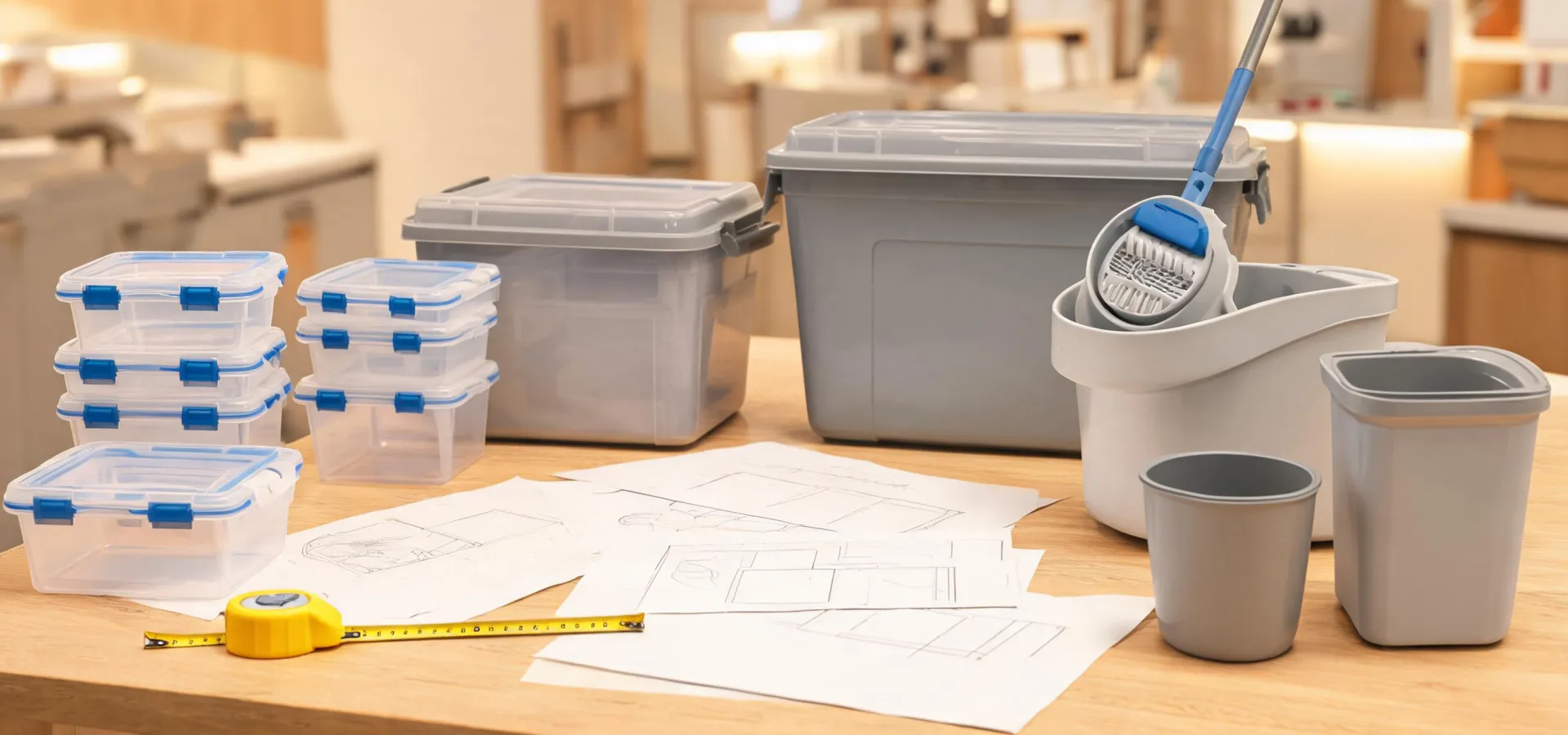
A good Rubbermaid system balances four questions: What needs to be seen, what needs to be carried, what needs to be cleaned and what needs to fit back on the shelf. A clear pantry container may solve visibility but fail if the lid style does not match the way lunches are packed. A garage tote may be strong enough but too tall for the shelf it must live on. A mop bucket may be useful on cleaning day but frustrating if it blocks the laundry door the rest of the week.
This buying guide uses practical checkpoints instead of broad style language. Measure the shelf. Count the turns between emptying trash. Notice who carries the tote. Decide whether food storage must go from fridge to microwave to dishwasher. Then pick the Rubbermaid category that supports that behavior with the fewest extra steps.
Pantry, closet, garage, laundry and entry zones each have different shelf depths, humidity, traffic and lifting needs.
Trash cans, bins and food containers should match how quickly the household fills, empties, washes and restocks them.
Products work longer when wiping, rinsing, refilling and returning them to storage feels easy enough to repeat.
Look for clear walls, reliable lids, stack height and easy washing.
Prioritize rugged handles, matching footprints and labels that stay visible.
Review handle storage, refill paths, bucket movement and microfiber care.
Match gallon size, lid action and liner fit to household traffic.
Rubbermaid can help you compare storage bins, food containers, trash cans and cleaning tools by capacity, room fit and everyday handling. Add dimensions, current pain points and the number of people using the space.